eCommerce 101-What Every Key Account Manager Must Know Before Managing Marketplaces
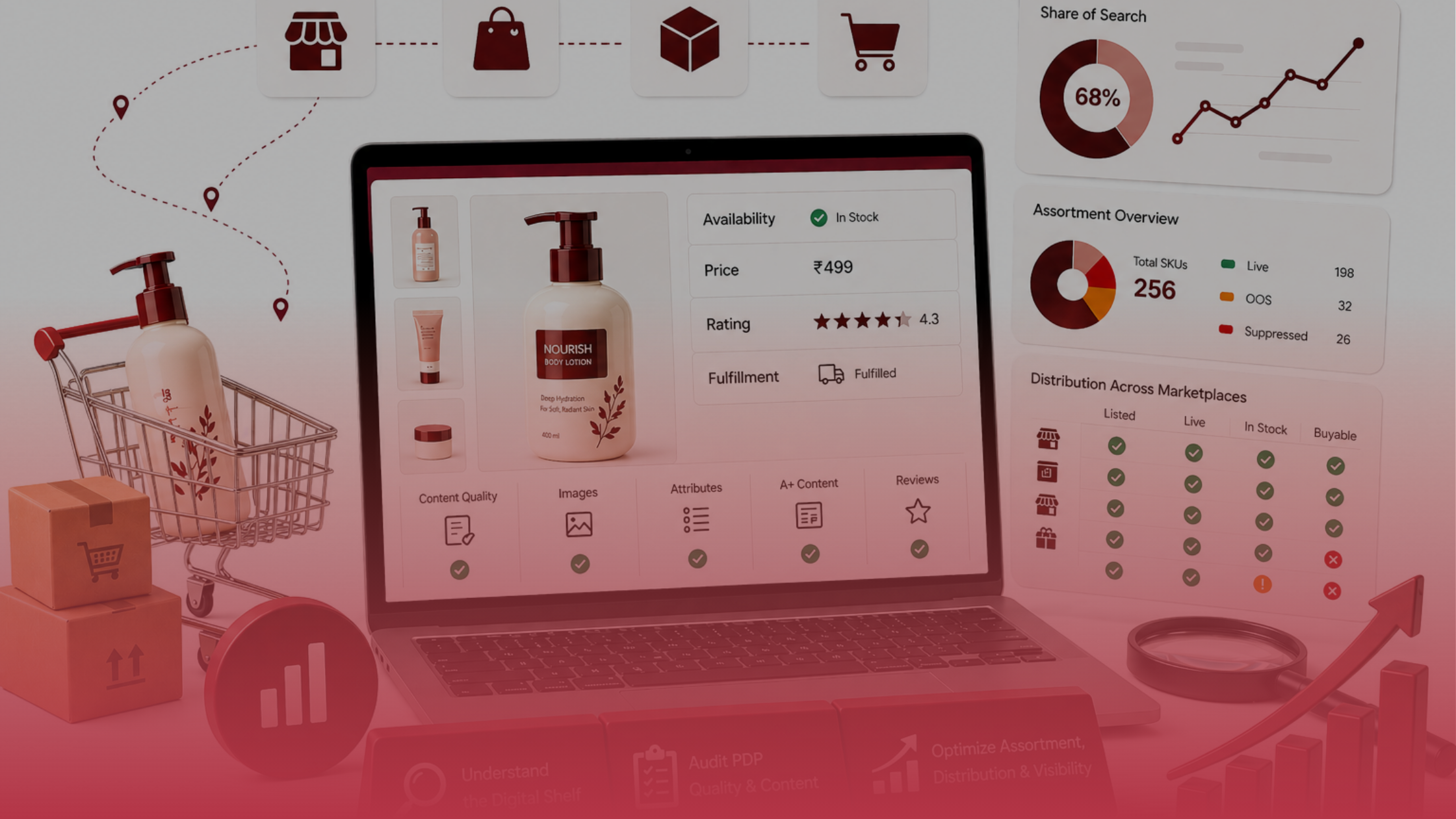
If you are coming from a traditional key account management background, having managed general trade, modern trade, or institutional accounts, stepping into marketplace management can feel unfamiliar. The vocabulary is different. The levers are different. The feedback loops are faster and more brutal.
But the underlying goal is identical: grow revenue, protect margin, and make your brand have the strongest presence in its category.
This blog covers the concepts, metrics, and commercial disciplines every KAM must understand before they can confidently own a marketplace account. From managing the digital shelf to running retail media to closing execution gaps.
1. The Digital Shelf Is Your Store
In traditional trade, you can walk into a retail outlet and see exactly how your brand is placed, which shelf, which eye level, which promotions are up. In eCommerce, you cannot physically walk the store. The digital shelf is your store, and it is invisible unless you actively measure it.
The digital shelf encompasses every product signal a shopper sees online: content quality, images, ratings and reviews, price, availability, promotions, and search placement. As a KAM, you are responsible for the quality and consistency of your brand's digital shelf across every marketplace account you manage.
2. The Marketplace P&L: What You Are Really Managing
Understanding your marketplace account's P&L is non-negotiable. Most KAMs coming from traditional trade are used to thinking in terms of primary sales and secondary sell-out. Marketplace P&L has a different structure:
- Gross GMV: Total value of all orders placed.
- Marketplace Commission / Referral Fee: The platform's cut of each sale - typically 5–20% depending on category.
- Logistics and Fulfilment Cost: Charged per shipment based on weight and dimensions, if using platform fulfilment.
- Returns and Reverse Logistics: Returns incur a pickup fee, restocking fee, and often destroy the unit's resale value. High return rates are a margin killer.
- Retail Media Spend: Your investment in sponsored products, sponsored brands, and display ads within the marketplace environment. This is now effectively a mandatory cost of doing business on most platforms.
- Promotional Investment: Discounts, coupons, and cashback funded by the brand for platform events. These are typically mandatory to participate in major sale events.
- Net Revenue / Net Sales Realization: What remains after all the above deductions. This is your real commercial outcome on the account.
Margin on marketplace accounts is compressed from multiple directions simultaneously.
3. Buy Box, Price Parity, and Pricing Discipline
The Buy Box
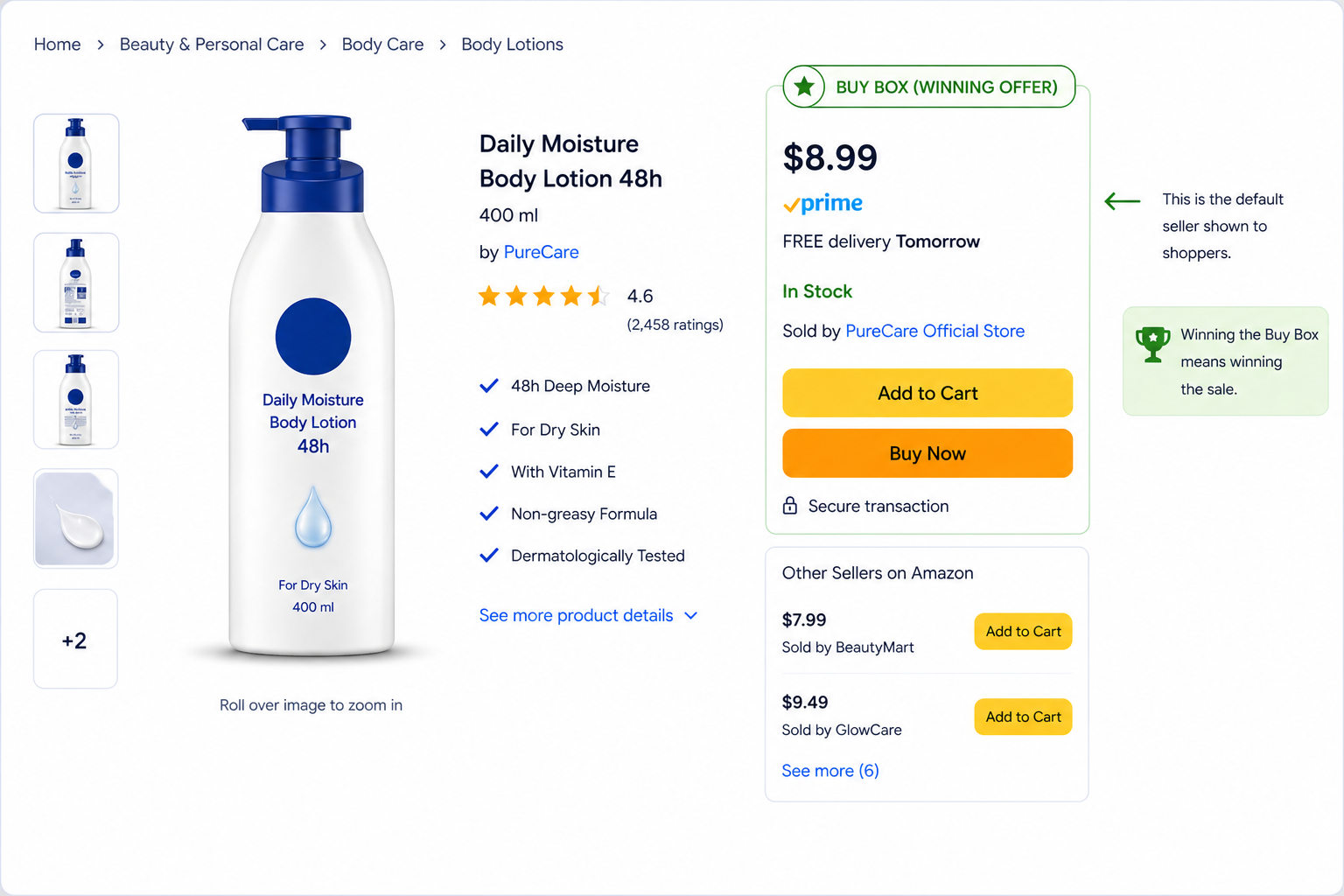
On most major marketplaces, multiple sellers can offer the same product. The Buy Box is the default seller placement on a product detail page. The one that captures most of the conversion when a shopper clicks 'Add to Cart' or 'Buy Now.' Winning the Buy Box depends on a combination of price competitiveness, seller performance metrics, fulfilment speed, and in-stock rate.
As a KAM, track your Buy Box percentage for your top SKUs weekly. A sudden drop in Buy Box ownership is almost always caused by a reseller undercutting your price or a dip in your account health metrics.
Learn more about how Meobyr helps you track and win the Buy Box
Price Parity
Price parity is the discipline of maintaining consistent pricing for the same SKU across all channels, subject to your channel pricing strategy. Many marketplaces contractually require price parity: your product should not be sold cheaper on another platform or your own website.
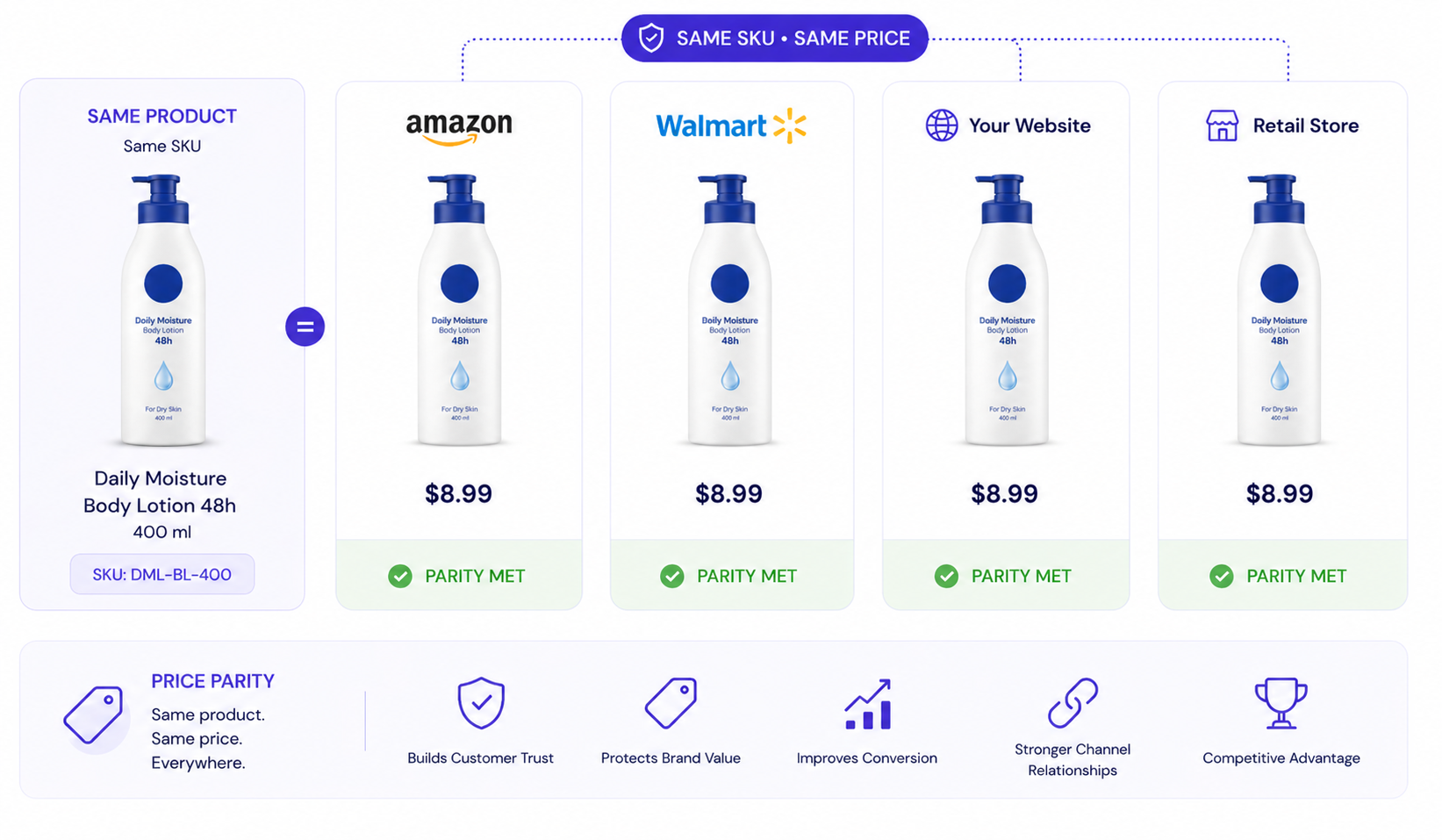
Beyond contractual requirements, price parity matters for brand equity. Shoppers research across platforms. If they see your product at two different prices on two platforms, trust erodes.
MAP Compliance
Most brands enforce a Minimum Advertised Price (MAP) - the floor below which no seller should advertise the product. On marketplaces, unauthorized resellers routinely undercut MAP, triggering pricing pressure across the account.
4. Promo Compliance and Promotional Uplift
Promo Compliance
Promo compliance means ensuring that planned promotions are live on-platform, correctly executed, and aligned with the agreed mechanics and timing.
A promotion planned six weeks out can fail to go live due to incorrect deal setup, wrong SKU mapping, missing deal approval, or a platform rejection. When this happens during a high-traffic event such as a flash sale, a brand day, or a platform mega-event, the GMV impact is immediate and significant.
Promotional Uplift
Promotional uplift is the incremental sales effect a promotion generates above the expected baseline.
5. Retail Media: The New Trade Spend
Retail media is paid advertising run within retailer or marketplace environments, sponsored product listings, sponsored brand banners, display ads, and off-platform media bought through the retailer's ad network. On most major marketplaces, retail media is now the primary lever for driving traffic, improving search rank, and accelerating conversion on new product launches.
Every KAM needs to understand the basic retail media metrics:
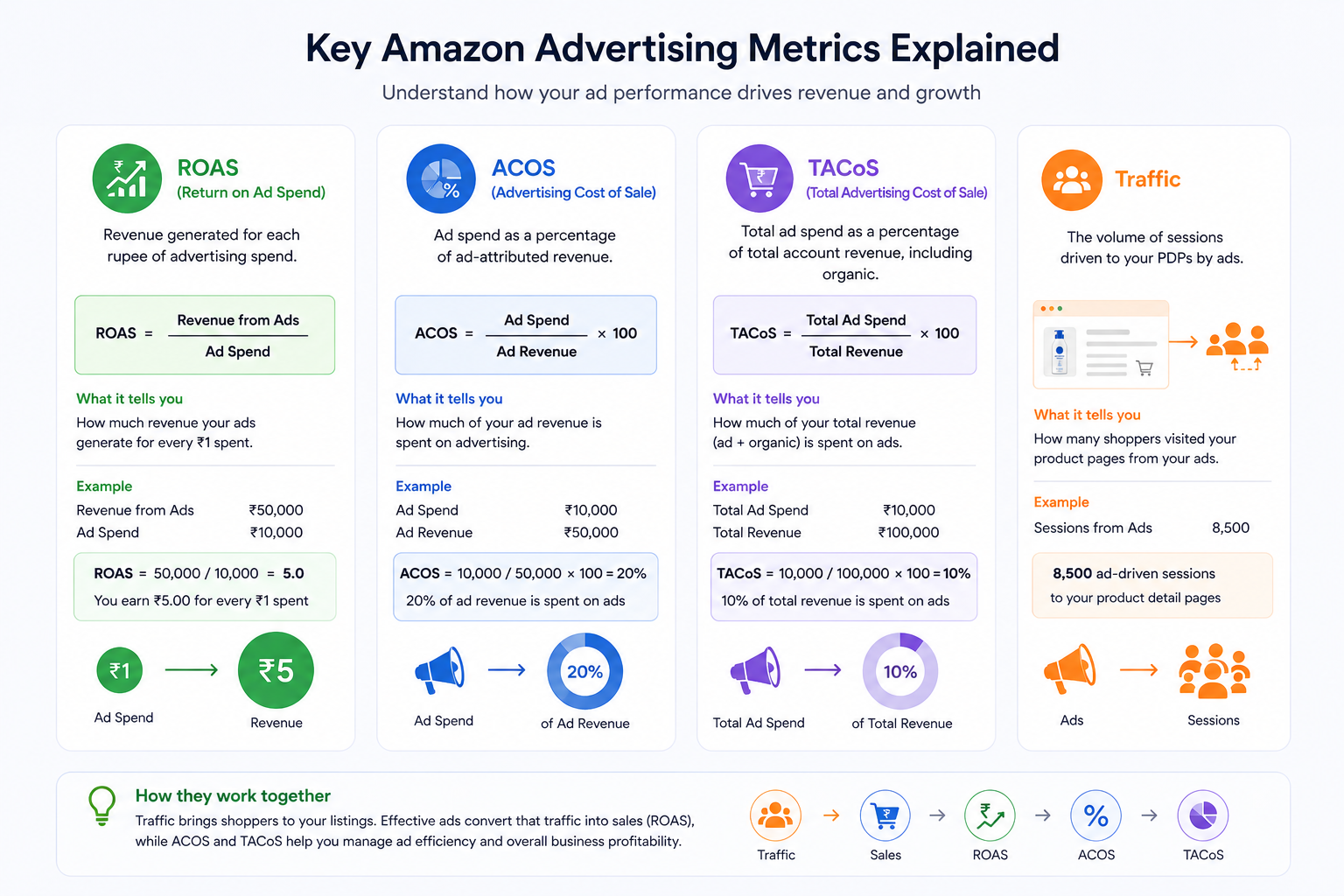
- ROAS (Return on Ad Spend): Revenue generated for each rupee of advertising spend. ROAS = Revenue from Ads / Ad Spend.
- ACOS (Advertising Cost of Sale): Ad spend as a percentage of ad-attributed revenue. ACOS = Ad Spend / Ad Revenue.
- TACoS (Total Advertising Cost of Sale): Total ad spend as a percentage of total account revenue, including organic.
- Traffic: The volume of sessions driven to your PDPs by ads.
The shift from traditional trade marketing investment to retail media is one of the most significant structural changes in commercial management over the last five years. Budget conversations with leadership need to reflect this reality.
Managing a marketplace account well requires more than a good relationship with the platform's account team. It requires daily attention to the digital shelf, rigorous tracking of Buy Box health and price parity, airtight promo compliance processes, and a clear understanding of retail media ROI.